Galactic Archaeology
In the last decade increases in the scope and sensitivity of observations around our own Milky Way Galaxy and the nearest neighboring galaxy (Andromeda) have revealed many indications of debris from satellite destruction. Models of the outskirts of galaxies can be built to mimic the results of the destruction of many satellites by superposing satellite simulations.
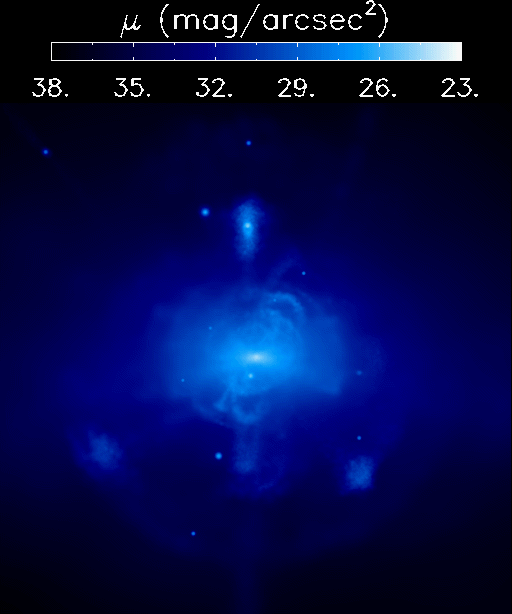
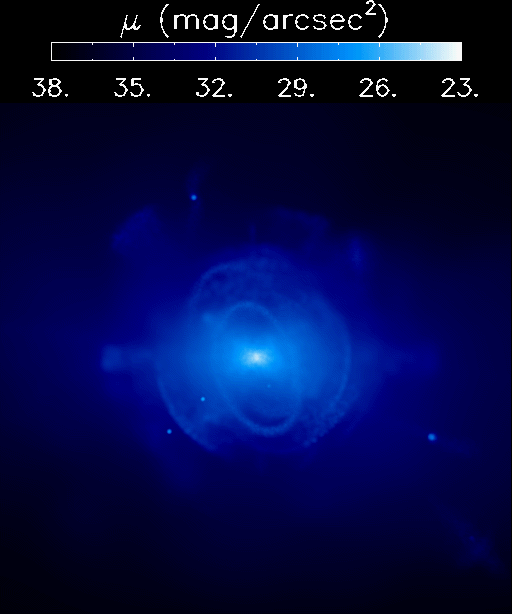
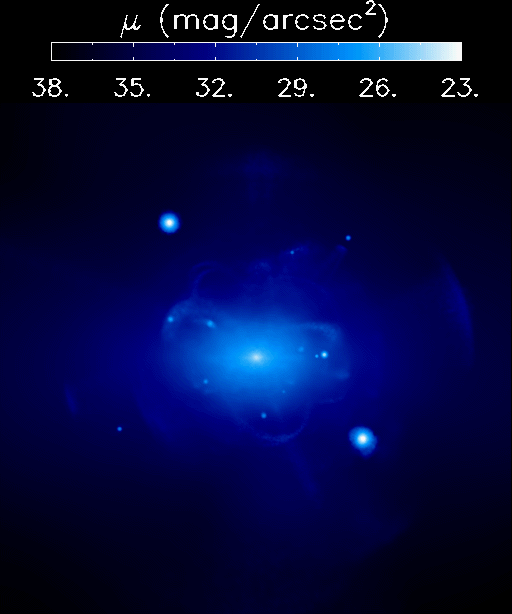
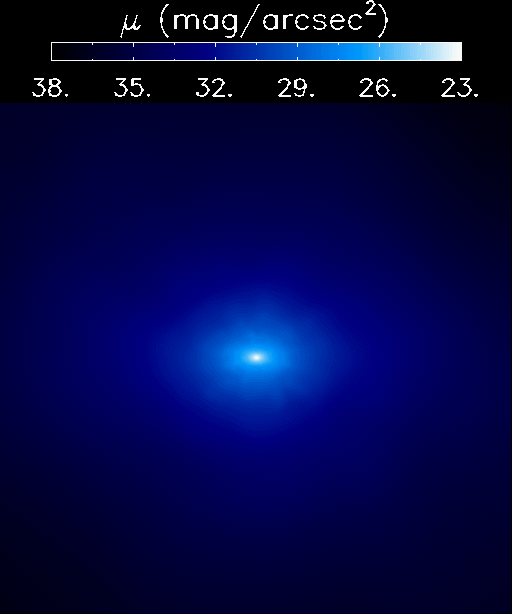
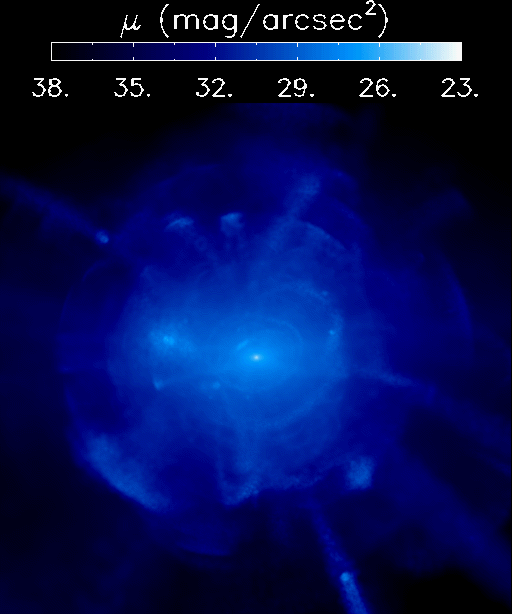
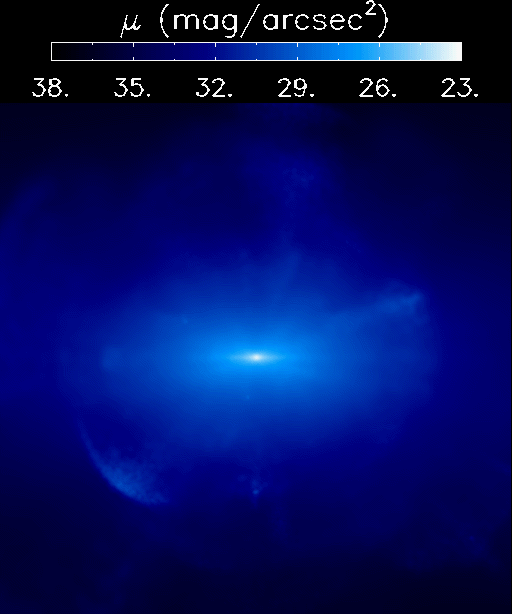
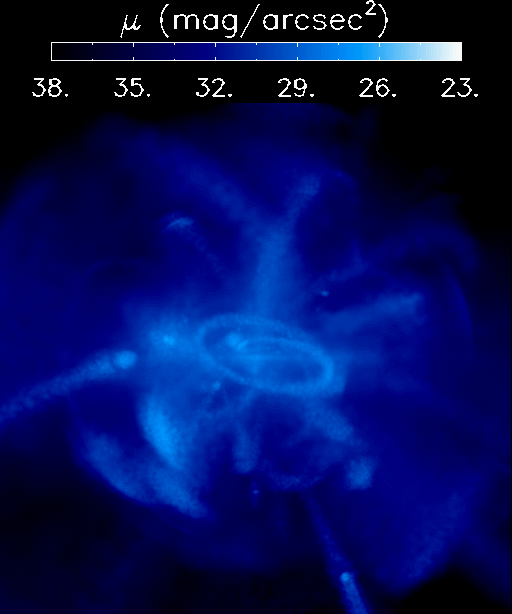
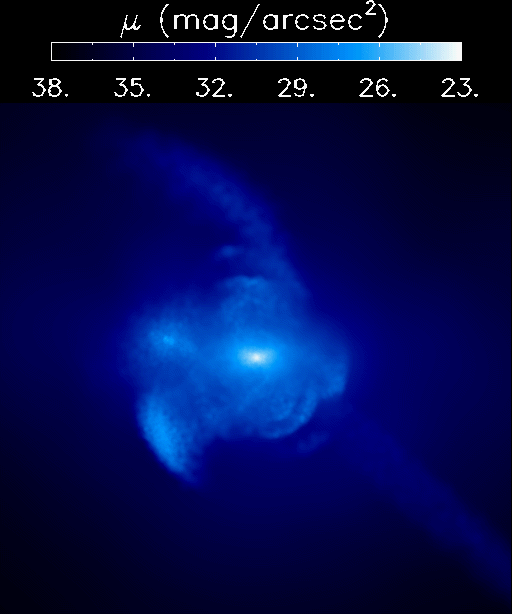
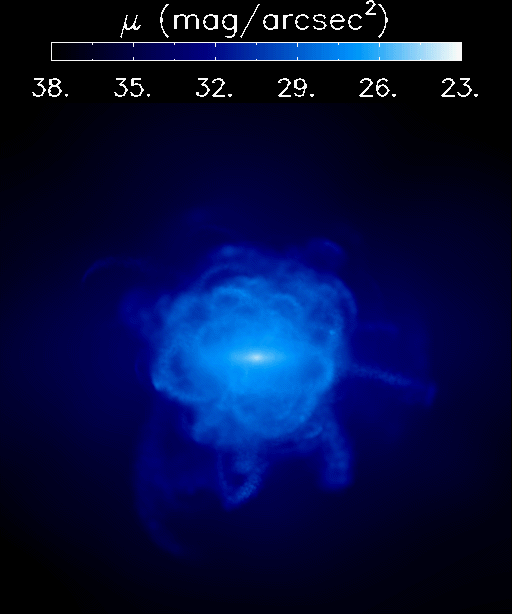
The images above show three examples of how the outskirts of galaxies might look if we were able to detect the very faint (low surface brightness) stellar halo light around them.
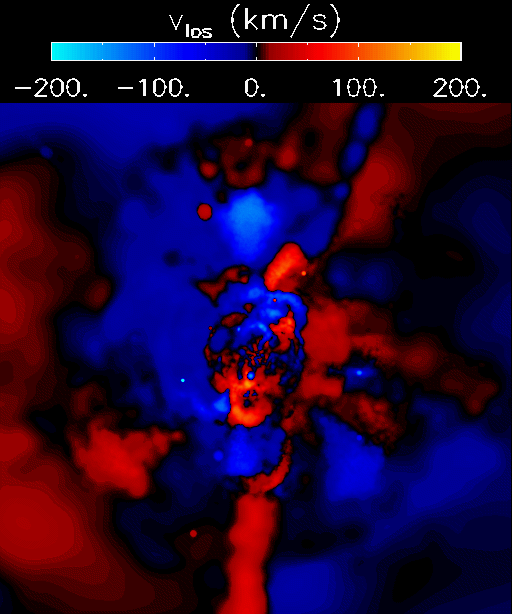
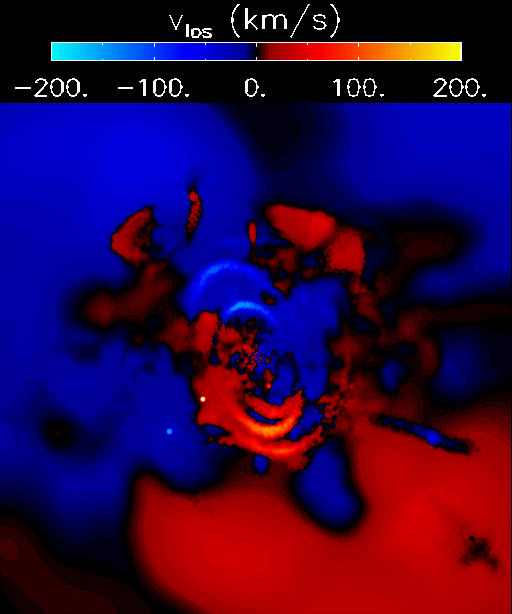
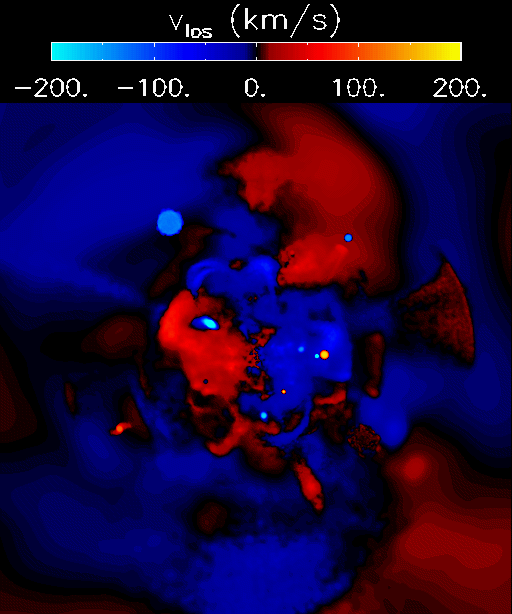
The next row of images shows Iine-of-sight velocity of stars that would be observed for the same simulated stellar halos.
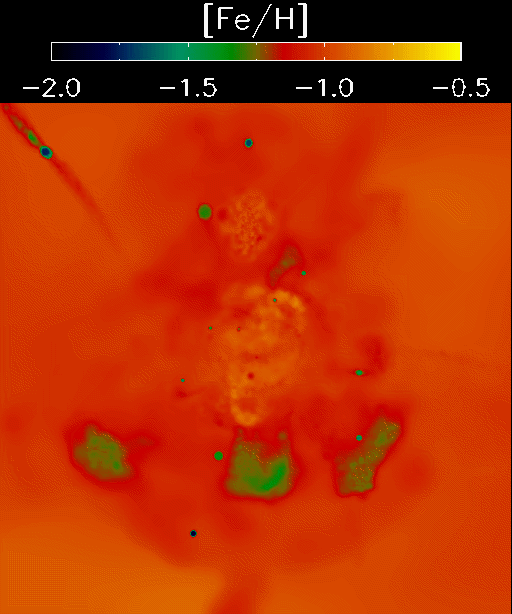
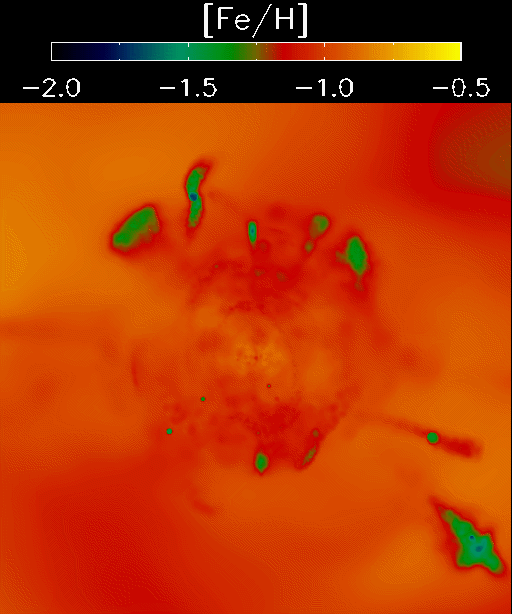
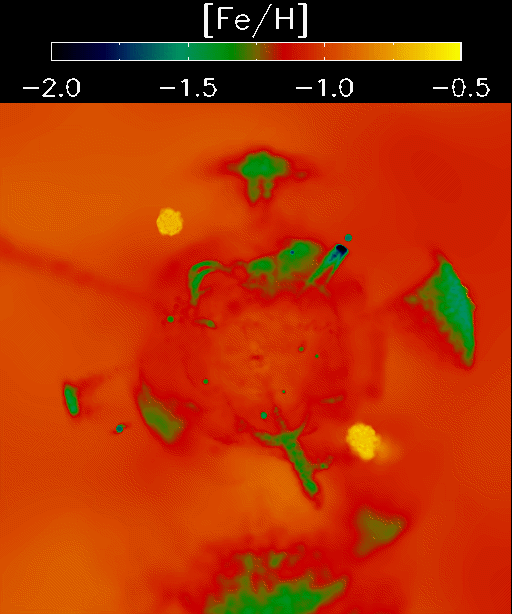
The bottom row of images shows metallicity of stars (amount of elements heavier than hydrogen or helium) that these stellar halos contain.
The images above demonstrate that analyses of these simulations and comparison to observations should tell us more about the objects from which they were actually formed. Below are images from experiments to illustrate this idea. The left upper/lower pair of images show simulated stellar halos built entirely from ancient or recent events. The middle pair show the case when the halos are built entirely from low-mass or high-mass events. The right pair show the case when the halos are built entirely from events on near radial or near-circular orbits.
Notes
- This work was supported in part by an NSF "CAREER" grant (2002-2007)
- The models are described in Bullock & Johnston (2005), Robertson et al (2005), Font et al (2006), Johnston et al (2008) - see publications
- Several papers have used these models to compare to observations, including: Font et al (2008), Bell et al (2008), Gilbert et al (2008) Xue et al (2011), Deason et al (2013)
- Others use the models to explore what current and future observations might tell us, including: Font et al (2006), Sharma et al (2010), Sharma et al (2011), Teyssier, Johnston & Kuhlen (2012), Johnston et al (2012), Lee et al (2015)
- The full models are available here
- Sanjib Sharma built the code galaxia which (among other things) incorporates these models with full stellar populations.